
Have you ever tried to show love to your spouse, only to feel like your efforts were barely noticed? Maybe you regularly tell your spouse how much you love and appreciate them, but what they really want is for you to help with the dishes. Perhaps you buy thoughtful gifts, but your spouse would rather spend an uninterrupted evening talking with you.
This does not mean that your spouse is ungrateful or that you are failing in your marriage. It may simply mean that you have different love languages.
Having opposite love languages is extremely common in marriage. In fact, many husbands and wives naturally express love in the way they personally want to receive it. The problem is that your way of communicating love may not be the way your spouse most easily recognizes and feels it.
Learning how to speak your spouse’s love language can strengthen emotional intimacy, improve communication, reduce resentment, and create a happier and more connected marriage. It may require intentional effort, but the results can completely transform your relationship.
What Are the Five Love Languages?
The five love languages describe five common ways that people give and receive love. Most people appreciate all five, but one or two usually have a stronger emotional impact.
Understanding each love language can help you recognize what makes your spouse feel loved, valued, desired, and important.
Check out our podcast where we interview Dr. Gary Chapman, the author of the 5 Love Languages. 427. Interview With World Renowned Author Dr. Gary Chapman Of The 5 Love Languages.

Words of Affirmation
A spouse whose love language is words of affirmation feels loved through sincere compliments, encouragement, appreciation, and verbal expressions of affection.
This spouse may light up when you say, “I appreciate how hard you work for our family,” “You look beautiful today,” or “I am so grateful I married you.”
Words carry tremendous emotional weight for this spouse. Loving words can create connection, while criticism, sarcasm, and a lack of verbal appreciation can be especially painful.
You can speak this love language through thoughtful text messages, handwritten notes, sincere compliments, verbal encouragement, and regularly expressing gratitude.
Quality Time
A spouse whose love language is quality time feels loved through focused attention and meaningful time together.
This does not simply mean sitting in the same room while both of you look at your phones. Quality time requires presence. It may include going on a date, taking a walk, talking after the children are asleep, playing a game, cooking together, or sharing an activity you both enjoy.
For this spouse, distractions can feel like rejection. Putting your phone away, making eye contact, listening carefully, and creating regular time for connection communicates, “You matter to me.”

Acts of Service
A spouse whose love language is acts of service feels loved when you notice what needs to be done and willingly help.
Folding the laundry, cleaning the kitchen, filling the car with gas, handling bedtime with the children, preparing dinner, or completing a task your spouse has been worried about can be powerful expressions of love.
For this spouse, actions often speak louder than words. Promising to help and then failing to follow through can feel especially hurtful. Reliability, teamwork, and thoughtful service help this spouse feel supported and cared for.
Receiving Gifts
A spouse whose love language is receiving gifts feels loved through thoughtful and meaningful items that communicate, “I was thinking about you.”
The value of the gift is usually not determined by its price. A favorite treat, a flower, a book, a small surprise, or a meaningful keepsake may matter far more than an expensive purchase.
The gift becomes a visible reminder of love and attention. This spouse feels valued when you remember important occasions and notice the small things they enjoy.
Physical Touch
A spouse whose love language is physical touch feels loved through affectionate physical connection.
Holding hands, hugging, cuddling, kissing, sitting close together, rubbing your spouse’s shoulders, and offering affectionate touch throughout the day can create emotional security and closeness.
Physical touch is not limited to sexual intimacy. A spouse may need regular affection that does not always lead to sex. When loving touch is freely given throughout the day, it can strengthen trust, connection, and sexual intimacy within marriage.

What Happens When Spouses Have Different Love Languages?
Different love languages can create frustration when spouses do not understand what is happening.
Imagine that a wife’s primary love language is acts of service. She feels overwhelmed and longs for her husband to notice what needs to be done. Her husband’s love language is physical touch, so he frequently hugs her, kisses her, and initiates intimacy. He believes he is clearly showing love, but she may still feel unsupported.
At the same time, she may complete tasks for him, organize the home, and take care of countless responsibilities. She believes she is expressing love through everything she does. However, he may still feel physically disconnected and undesired.
Both spouses are giving love, yet neither feels fully loved.
This is one of the greatest challenges of having opposite love languages. You may sincerely love your spouse and make significant efforts, but those efforts may not reach your spouse’s heart in the way you intended.
The answer is not to stop expressing love naturally. The answer is to add expressions of love that your spouse can clearly recognize.

Love Your Spouse in the Way They Receive Love
One of the most meaningful things you can do in marriage is learn to show love in your spouse’s love language, even when it does not come naturally to you.
Real love is not only about giving what is easy for us to give. It is also about discovering what helps our spouse feel secure, cherished, appreciated, and connected.
If your love language is words of affirmation, saying “I love you” may feel incredibly meaningful. If your spouse’s love language is acts of service, those words may become even more powerful when they are accompanied by helpful action.
If your love language is receiving gifts, you may enjoy surprising your spouse with thoughtful items. If your spouse’s love language is quality time, the greatest gift may be setting aside an evening to be fully present.
Your intention matters, but your spouse’s experience matters too.
Learning your spouse’s love language helps close the gap between the love you intend to give and the love your spouse actually feels.
Speaking a Different Love Language Takes Practice
Your spouse’s love language may initially feel awkward or unnatural. That does not mean your efforts are insincere. It simply means you are learning a new way to communicate.
Think about learning a spoken language. At first, you have to concentrate on the words. You may make mistakes or forget what to say. With practice, the language becomes more familiar.
The same is true in marriage.
If words of affirmation are difficult for you, begin by expressing one sincere appreciation every day. If quality time is important to your spouse, schedule it instead of assuming it will happen naturally. If your spouse values acts of service, ask which tasks would make the biggest difference. If receiving gifts matters to your spouse, keep a list of things they mention enjoying. If physical touch is important, intentionally offer more affectionate contact throughout the day.
Love is still genuine when it is intentional.
In fact, making an effort to communicate love in a way that does not come naturally can be one of the clearest demonstrations of commitment.
If you want to know what your spouses love language is, or what yours is, find out for free on the Ultimate Intimacy App under our language of love quiz.

Do Not Use Love Languages as a Weapon
Love languages should help spouses understand each other. They should never become demands, excuses, or tools for keeping score.
Saying, “If you really loved me, you would do this,” creates pressure rather than connection. A love language is not permission to control your spouse or dismiss their boundaries.
Physical touch does not mean a spouse is entitled to sex. Acts of service do not mean one spouse should carry every household responsibility. Quality time does not mean your spouse can never have time alone. Words of affirmation do not require constant praise, and receiving gifts does not justify irresponsible spending.
Healthy love languages are expressed through mutual care, respect, communication, and consent.
It is also important to remember that meeting your spouse’s love language should not be one sided. Both spouses have a responsibility to learn, grow, and make an effort. A strong marriage is created when each spouse asks, “How can I help you feel loved?” instead of only asking, “Why are you not loving me the way I want?”
Talk About What Makes You Feel Loved
Do not assume that you know your spouse’s love language based only on a quiz. Talk openly about what makes each of you feel connected.
Ask questions such as:
What makes you feel most loved by me?
What is something I do that helps you feel appreciated?
When do you feel closest to me?
What do you wish I did more often?
Is there anything I do with good intentions that does not feel meaningful to you?
What is one small thing I could do this week to help you feel loved?
These conversations can reveal details that a simple love language label may miss. Two people may both value quality time but define it very differently. One spouse may want deep conversation, while the other wants to share activities and experiences.
Curiosity helps you love the actual person in front of you, not merely your idea of what their love language should look like.

Create a Simple Love Language Plan
Understanding your different love languages is helpful, but change comes through consistent action.
Each spouse can choose two or three specific ways to speak the other’s love language every week.
For words of affirmation, send a loving text or offer a specific compliment.
For quality time, schedule a date night or create twenty minutes of uninterrupted conversation.
For acts of service, complete a task your spouse normally handles.
For receiving gifts, bring home a small and thoughtful surprise.
For physical touch, initiate a long hug, hold hands, cuddle, or offer affectionate touch without expectation.
Small expressions of love performed consistently are often more meaningful than occasional grand gestures.
You can also use the Ultimate Intimacy App to start meaningful conversations, send private messages, plan intimate time, and discover new ways to build emotional and physical intimacy with your spouse.
Your Love Languages Can Strengthen Your Marriage
Having opposite love languages does not mean you are incompatible. It gives both of you an opportunity to become more thoughtful and intentional in the way you love.
Differences can teach you to look beyond your own preferences. They can help you listen more closely, communicate more clearly, and serve each other more compassionately.
You do not need to stop showing love in the ways that feel natural to you. Those expressions are still valuable. The goal is to expand the ways you communicate love so that your spouse can receive it more fully.
When both spouses make this effort, marriage becomes a place where each person feels noticed, appreciated, supported, desired, and understood.
Love is more than a feeling. It is the daily decision to learn your spouse’s heart and communicate in a language that reaches it.
You may have opposite love languages, but you can still create a deeply connected and fulfilling marriage. When you stop waiting for your spouse to love exactly like you do and begin learning how they experience love, you create room for greater emotional intimacy, stronger communication, deeper trust, and a more passionate relationship.
Your love languages do not have to divide you. When understood and used with generosity, they can become one of the most powerful tools for strengthening your marriage.
Ultimate Intimacy
What if one app could completely change your marriage—emotionally, physically, and intimately?
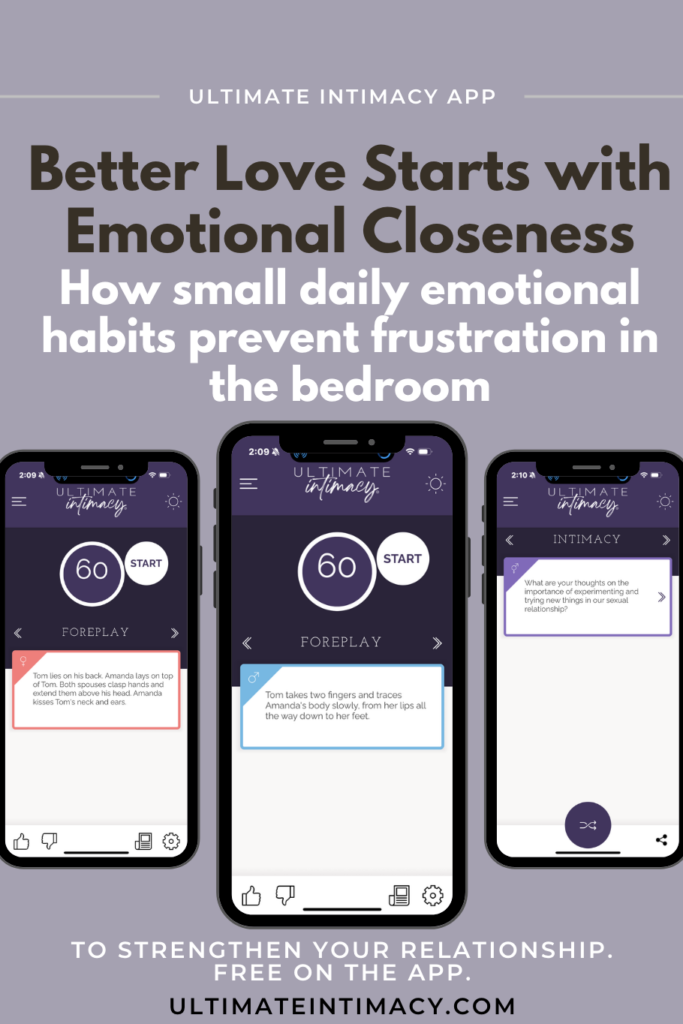
With nearly 1 million downloads and an almost perfect 5-star rating, the Ultimate Intimacy App is not just another marriage tool—it’s the #1 resource couples everywhere are raving about. Why? Because it works.
Created with therapists and marriage experts, this app is helping couples reignite passion, deepen emotional connection, and bring back the spark in and out of the bedroom. And it’s done the same for thousands just like you.
Inside, you’ll find:
- Exciting sex & intimacy games
- Truth or Dare: Bedroom Edition
- 150+ tasteful sex positions with detailed instructions
- Spicy conversation starters & Would You Rather
- Intimate chat & custom intimacy calendar
- Love language quizzes, articles, product recommendations & so much more!
This isn’t just an app—it’s your personal intimacy coach, playful bedroom companion, and emotional reconnection tool all in one.
Don’t wait to rediscover each other. Download the Ultimate Intimacy App today—because your marriage deserves more than average.
Download for free today by clicking on the image or App Store buttons below!


Transform Your Intimacy With Our Christian Friendly Products!
We offer tons of great intimate products, card decks, games, lubricants, massage oil and so much more to spice up and enhance the intimacy in your relationship. We are a “Christian friendly” store and offer FREE shipping in the USA! Just click on any of the images below to go to our store.

