
When many couples hear the word foreplay, they immediately think about what happens in the bedroom shortly before sex. They picture kissing, touching, flirting, and other physical activities that help prepare both spouses for sexual intimacy.
While those things are important, true foreplay often begins hours or even days before a couple enters the bedroom.
At Ultimate Intimacy, we believe that foreplay is not simply a physical activity. It is the ongoing process of helping your spouse feel loved, wanted, respected, appreciated, and emotionally connected to you.
The way you speak to your spouse in the morning matters. The affection you show throughout the day matters. The way you respond when your spouse is stressed matters. Your willingness to help with responsibilities, plan meaningful time together, put away your phone, and offer genuine compliments can all influence what happens later in the bedroom.
Sexual intimacy rarely exists in isolation from the rest of the marriage. What happens outside the bedroom often determines how safe, connected, relaxed, and desired each spouse feels inside the bedroom.

Foreplay Is a Climate, Not Just an Event
Think of intimacy as the climate of your marriage rather than one isolated event.
If the emotional climate has been cold, critical, disconnected, or tense all day, it can be difficult to suddenly create warmth and passion at bedtime. A spouse may need more than a few minutes of physical touch to overcome hours of feeling ignored, overwhelmed, criticized, or unappreciated.
On the other hand, when affection, kindness, teamwork, and attention have been present throughout the day, physical intimacy often feels like a natural continuation of the connection that is already there.
This does not mean every kind action should lead to sex. It also does not mean helping around the house earns a spouse sexual access. Love, respect, service, and affection should never be used as currency or manipulation.
It means that healthy intimacy grows in an environment where both spouses feel valued.
All day foreplay is about creating that environment.
How You Treat Your Spouse Matters
Your spouse will have a difficult time feeling emotionally close to you if your words and behavior regularly communicate disrespect.
Sarcasm, criticism, contempt, dismissiveness, yelling, eye rolling, and constant correction can damage emotional safety. Even if you are physically attracted to your spouse, attraction alone cannot erase the pain caused by unkind behavior.
The Gottman Institute has found that stable and happy marriages tend to have at least five positive interactions for every negative interaction during conflict. This does not mean strong couples never disagree. It means their disagreements take place within a much larger culture of fondness, respect, affection, humor, validation, and friendship.
Those positive interactions are part of all day foreplay.
A warm greeting can be foreplay. A genuine compliment can be foreplay. Listening without becoming defensive can be foreplay. Apologizing when you have caused pain can be foreplay. Showing gratitude for something your spouse does every day can be foreplay.
These moments communicate an important message.
You matter to me.
When that message is consistently felt throughout the marriage, intimacy has a much stronger foundation.

Helping Around the House Can Build Connection
Household responsibilities are one of the most common sources of resentment in marriage.
When one spouse feels responsible for most of the cooking, cleaning, laundry, scheduling, parenting, shopping, and mental planning, exhaustion can quickly replace desire. It is difficult to feel relaxed and available for intimacy when your mind is still racing through a list of unfinished tasks.
Helping around the house is not a trick for getting sex. It is part of being a loving and responsible teammate in marriage.
Look around and notice what needs to be done without waiting for your spouse to manage you. Load the dishwasher. Fold the laundry. Help the children get ready for bed. Clean the kitchen. Take care of a task your spouse has been worrying about.
The goal is not to perform one chore and then expect a reward. The goal is to communicate that your spouse is not alone in carrying the responsibilities of your shared life.
Teamwork reduces resentment. It also creates more time, energy, and emotional space for connection.
For many spouses, seeing their husband or wife take initiative is deeply attractive because it communicates care, maturity, and awareness. It says, “I see how much you are carrying, and I want to help.”
That kind of consideration can create closeness long before either spouse thinks about entering the bedroom.
Affection Without Pressure Is Powerful
Physical affection should not happen only when one spouse wants sex.
If every kiss, back rub, hug, or cuddle becomes an attempt to initiate sex, the spouse with lower desire may begin avoiding affection altogether. Touch can start to feel like pressure instead of love.
Healthy marriages need affectionate touch that is allowed to remain affectionate.
Hold hands while watching television. Kiss your spouse goodbye. Sit close together. Offer a shoulder massage with no expectation attached. Hug for several seconds when you reunite after work. Place your hand gently on your spouse’s back as you walk past.
These small moments help maintain physical familiarity and emotional warmth.
The Gottman Institute teaches couples about turning toward bids for connection. A bid can be a question, a touch, a comment, a smile, or an invitation to share a moment. When spouses regularly turn toward those bids instead of ignoring or dismissing them, they make deposits into what the Gottmans call the Emotional Bank Account.
Every affectionate touch, caring response, and moment of attention can become a deposit.
A marriage filled with these deposits creates greater trust and connection. That emotional security can positively influence sexual intimacy because both spouses feel more seen, valued, and safe.

Date Nights Create Space for Desire
Date nights are not only for newlyweds. They are one of the most important ways married couples can continue choosing each other.
A regular date night provides time to step outside the roles of employee, parent, caregiver, scheduler, and household manager. It gives you a chance to remember that you are also lovers and friends.
Dates do not have to be expensive or elaborate. You can go for a walk, share dessert, sit outside and talk, play a game, drive somewhere beautiful, or cook dinner together after the children are asleep.
What matters is intentional attention.
Put away your phones. Ask meaningful questions. Laugh together. Flirt. Talk about something besides bills, schedules, and children. Remind your spouse what you admire about them.
Desire often needs room to breathe. When every conversation revolves around responsibilities, the romantic side of marriage can become buried beneath routine. Date nights help uncover it again.
They create anticipation, novelty, playfulness, and friendship. All of those qualities can strengthen attraction and make physical intimacy feel less scheduled and more connected.
Words Can Be a Form of Foreplay
The words you use throughout the day can either invite closeness or create distance.
Tell your spouse they look attractive. Send a loving or flirty text. Express gratitude. Mention a favorite memory. Tell your spouse you are looking forward to spending time together later.
You can also talk about intimacy in ways that feel safe and respectful.
Ask your spouse what helps them feel desired. Talk about what makes intimacy enjoyable. Discuss what creates pressure or disconnection. Share what helps each of you become mentally and emotionally available for physical closeness.
The Gottman Institute has emphasized that sexual and emotional intimacy are connected and that couples benefit from communicating openly about their needs and desires. Spouses should not be expected to read each other’s minds.
Talking about sex can itself become part of foreplay because it builds anticipation, understanding, and emotional safety.
These conversations should not happen only during conflict or immediately after rejection. Choose a calm time when neither spouse feels pressured. Approach the subject with curiosity rather than accusation.
Instead of saying, “You never want me,” try saying, “I miss feeling close to you. What helps you feel connected and open to intimacy?”
The second approach invites honesty instead of defensiveness.

Emotional Connection Influences Sexual Desire
Men and women can experience desire differently. Spouses can also have different desire patterns regardless of gender.
Some people experience spontaneous desire. They may think about sex and feel physically interested before any sexual activity begins.
Others experience responsive desire. Their interest may develop after they feel relaxed, emotionally connected, affectionate, or physically stimulated. They may not begin the evening already wanting sex, but desire can grow once closeness begins.
Understanding this difference can prevent couples from misinterpreting each other.
A spouse with spontaneous desire may assume, “If my spouse loved me or found me attractive, they would already want sex.”
A spouse with responsive desire may think, “I cannot even consider intimacy until I feel relaxed and connected.”
Neither spouse is necessarily broken or wrong. They may simply experience desire differently.
All day foreplay can be especially important for a spouse with responsive desire. Affection, help, kind words, emotional connection, and anticipation can create a path toward desire without pressure.
The goal is not to force desire. The goal is to understand the conditions that allow desire to grow.

Repair Conflict Before Expecting Closeness
Unresolved conflict can make intimacy extremely difficult.
If your spouse has expressed hurt and you responded with defensiveness, dismissal, or blame, the issue does not disappear simply because bedtime arrives. Your spouse may still feel emotionally unsafe or disconnected.
Before trying to initiate sex, ask whether there is anything that needs to be repaired.
A sincere apology can be powerful. Listen to understand rather than listening for an opportunity to defend yourself. Validate the impact of your behavior, even if your intention was different.
You might say, “I understand that my words hurt you. I am sorry. You did not deserve to be spoken to that way.”
Repair does not guarantee that sex will happen that night. That should not be the reason for apologizing. Repair is important because your spouse and your marriage matter.
Emotional safety is built when spouses know they can express pain and be treated with compassion. That safety allows vulnerability, and vulnerability is essential for meaningful intimacy.

Do Not Make Every Kind Act Transactional
There is an important difference between creating connection and trying to purchase sex with good behavior.
Cleaning the kitchen does not entitle you to your spouse’s body. Planning a date does not create an obligation. Giving a massage should not become a contract.
Your spouse can usually feel the difference between genuine love and hidden expectations.
When kindness is transactional, resentment grows on both sides. One spouse feels used, while the other feels cheated when the expected result does not happen.
All day foreplay should come from a sincere desire to nurture the marriage.
Serve your spouse because you love them. Show affection because closeness matters. Plan dates because the marriage deserves attention. Communicate respectfully because your spouse deserves respect.
Sexual intimacy is most connecting when it is freely chosen, mutually desired, and emotionally safe.
Make Connection a Daily Habit
Great intimacy is rarely created by one dramatic gesture. It is usually built through small choices repeated consistently.
Start the morning with affection. Check in during the day. Express appreciation. Share responsibilities. Protect time for each other. Put your phone away when your spouse is talking. Offer touch without pressure. Plan regular dates. Repair hurt quickly. Talk openly about intimacy.
These actions may seem simple, but they create the emotional conditions in which passion can grow.
At Ultimate Intimacy, we often remind couples that the bedroom reflects the rest of the marriage. If you want more connection during sex, build more connection throughout the day. If you want your spouse to feel desired, show desire in ways that are not limited to sexual initiation. If you want more vulnerability, create greater emotional safety.
Foreplay is not something you suddenly remember five minutes before sex.
It begins with the way you look at your spouse in the morning. It continues through the way you communicate, serve, touch, listen, flirt, and reconnect. It grows through kindness, trust, teamwork, affection, and intentional time together.
When spouses invest in each other all day, sexual intimacy can become more than a physical experience. It can become the natural expression of a marriage filled with love, friendship, safety, and connection.
That is why foreplay does not start in the bedroom.
It starts with how you treat your spouse every single day.
Ultimate Intimacy
What if one app could completely change your marriage—emotionally, physically, and intimately?
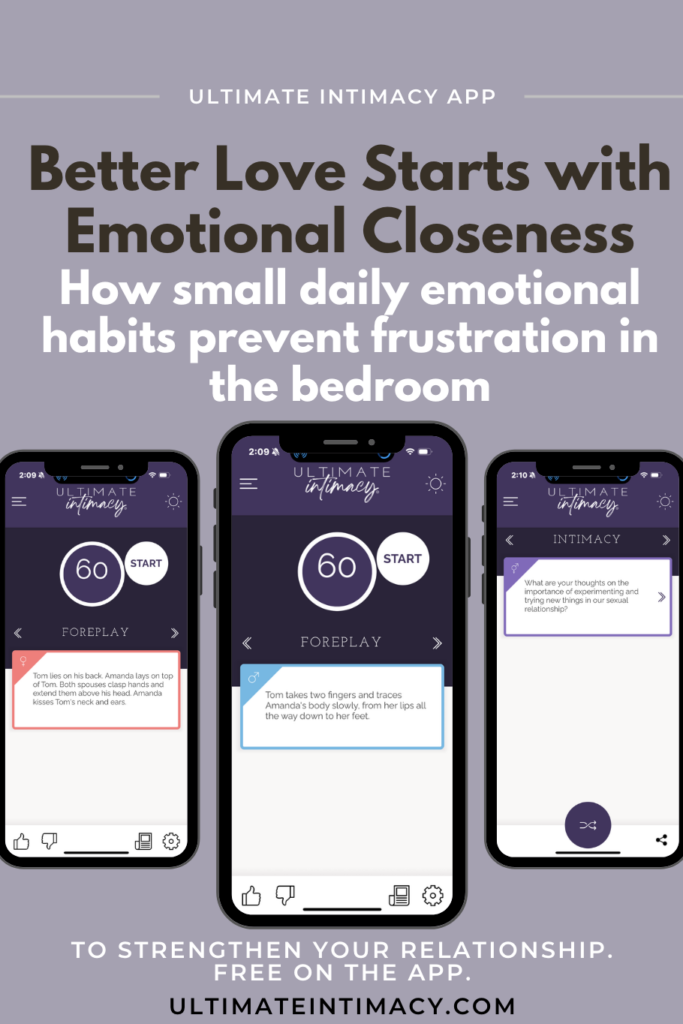
With nearly 1 million downloads and an almost perfect 5-star rating, the Ultimate Intimacy App is not just another marriage tool—it’s the #1 resource couples everywhere are raving about. Why? Because it works.
Created with therapists and marriage experts, this app is helping couples reignite passion, deepen emotional connection, and bring back the spark in and out of the bedroom. And it’s done the same for thousands just like you.
Inside, you’ll find:
- Exciting sex & intimacy games
- Truth or Dare: Bedroom Edition
- 150+ tasteful sex positions with detailed instructions
- Spicy conversation starters & Would You Rather
- Intimate chat & custom intimacy calendar
- Love language quizzes, articles, product recommendations & so much more!
This isn’t just an app—it’s your personal intimacy coach, playful bedroom companion, and emotional reconnection tool all in one.
Don’t wait to rediscover each other. Download the Ultimate Intimacy App today—because your marriage deserves more than average.
Download for free today by clicking on the image or App Store buttons below!


Transform Your Intimacy With Our Christian Friendly Products!
We offer tons of great intimate products, card decks, games, lubricants, massage oil and so much more to spice up and enhance the intimacy in your relationship. We are a “Christian friendly” store and offer FREE shipping in the USA! Just click on any of the images below to go to our store.

